

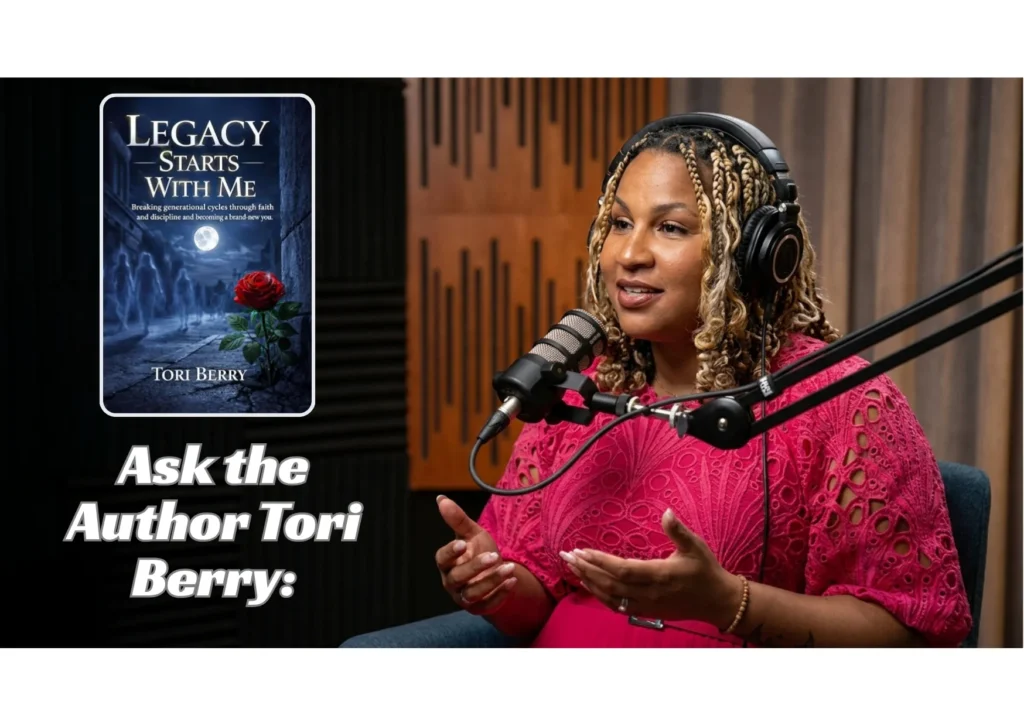
Since Legacy Starts With Me was released, I’ve heard a lot of the same questions from readers — some about the book itself, some about the message behind it. Here are honest answers to the ones I get asked most.
Is this book a memoir, a guide, or both — how would you describe it to someone who’s never heard of it?
It’s a memoir at its core — my story, told honestly — but it’s written with the intent to guide, not just to inform. I share what I went through, but I also share what I learned from it, so readers walk away with more than just my history. They walk away with something they can apply to their own.
Who is this book really for?
Anyone who feels like they’re carrying patterns they didn’t choose — patterns from their family, their upbringing, their past — and wants to be the one who finally changes the trajectory. It’s for the person who’s tired of waiting for someone else to do that work first.
Do readers need to share your faith background to get value from this book, or is it accessible either way?
My faith is central to my own healing, and I write about it honestly because it’s true to my story. But the core message — that you can take responsibility for your growth and choose a different future — is something I believe applies whether or not someone shares my specific faith background.
What’s a common misconception people have about the book before they read it?
That it’s going to be heavy from cover to cover. It’s honest, yes, and some parts are hard — but it’s ultimately a hopeful book. I didn’t write it to dwell in pain; I wrote it to show what’s possible on the other side of it.
What does “breaking a generational cycle” actually look like in practice, day to day?
It’s rarely dramatic. It looks like choosing to respond instead of react. Naming a pattern out loud instead of pretending it isn’t there. A small, unglamorous decision made consistently — not one big moment of transformation, but a thousand small ones.
Is there a difference between “healing” and “moving on” — and why does that distinction matter in the book?
“Moving on” often means burying something and hoping it stays buried. Healing means actually dealing with it — naming it, understanding it, and choosing what to do differently going forward. The book is about healing, not avoidance, because avoidance is exactly what keeps cycles going.
What role does discipline play alongside faith in the changes you write about?
Faith gives you the belief that change is possible. Discipline is what turns that belief into a daily practice. I don’t think one works without the other — faith without discipline stays a hope, and discipline without faith runs out of fuel.
If someone reads this book and feels like their family situation is “too far gone” to change, what would you say to them?
I’d say: you don’t have to fix your whole family to change your own trajectory. Legacy starting with you doesn’t require everyone else’s participation — it just requires your decision. Change in one generation is still change.
What’s one small, practical step a reader can take this week after finishing your book?
Name one pattern — just one — that you recognize from your upbringing that you don’t want to pass on. Write it down. Naming it is the first step to interrupting it.
How has readers’ response to the book surprised you so far?
How many people have told me they saw their own story in mine, even when the specific details were completely different. It reminded me that pain like this is far more common than most families are willing to admit out loud.
What’s next for you — another book, more speaking, coaching work?
I’m continuing to speak and coach around these themes, and I’m always writing — whether that becomes another book or continues through my blog, mentoring, and speaking, I’ll keep sharing what I’m learning as I go.
Have a question I didn’t answer here? Reach out — I’d love to hear from you.
