

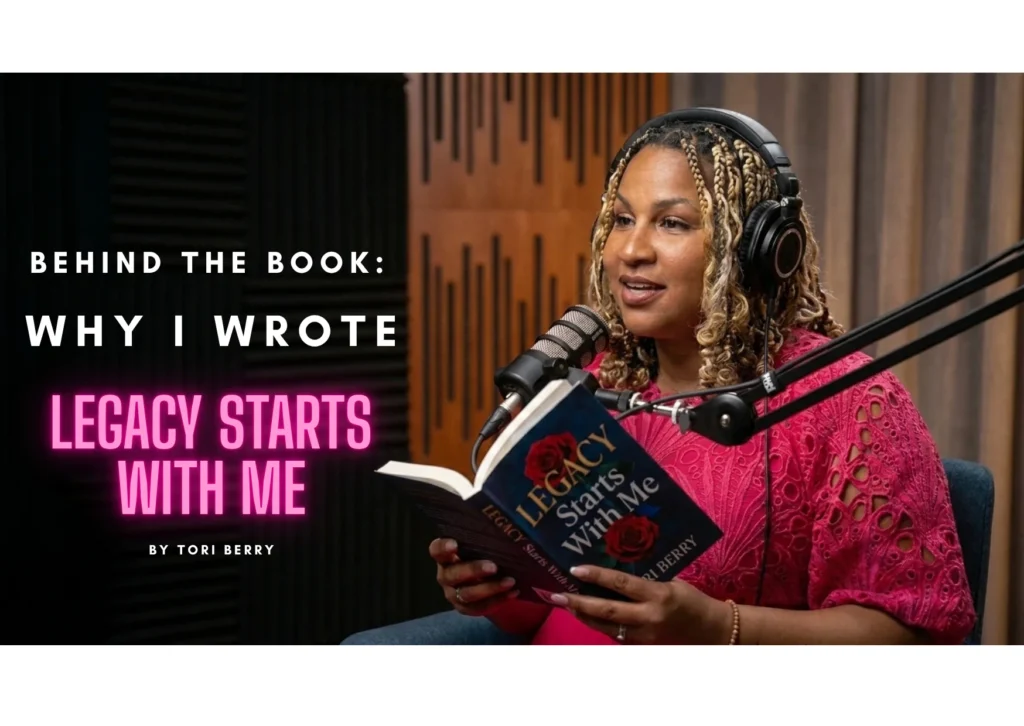
Writing a memoir means opening up parts of your life you’ve spent years processing quietly. Here’s a look at the story behind Legacy Starts With Me — why I wrote it, what it cost me, and what I hope it gives back to the people who read it.
What was the moment you knew you had to write this book?
There wasn’t one single moment — it was more of a slow realization. For years, I carried pieces of my story privately, thinking they were just mine to process. But the more I talked with other women facing similar struggles — instability, family dysfunction, the weight of patterns passed down without anyone naming them — the more I understood that my story wasn’t just personal. It was something other people needed permission to tell too.
Was there a specific event or conversation that pushed you to finally start writing?
It was less a single conversation and more an accumulation of them — conversations in ministry, in mentoring, in everyday life, where I kept hearing the same ache from different people: I don’t want to repeat what was done to me, but I don’t know how not to. At some point I realized silence wasn’t protecting anyone. It was just keeping the cycle going.
How long had the idea for this book been sitting with you before you actually began?
Longer than I probably admitted to myself. The healing came first — years of it — before the words did. I don’t think I could have written this honestly if I’d tried years earlier. I needed the distance and the perspective that only comes with time and faith.
How did you decide how much of your personal story to share versus keep private?
That was one of the hardest lines to draw. My rule became: share enough truth that someone in pain feels less alone, but protect the people in my life who didn’t choose to have their stories told publicly. Every family has more than one voice in it, and I tried to write with respect for that.
Was there a chapter or section that was hardest to write emotionally?
The parts dealing with childhood instability and rejection were the hardest — not because the memories were unclear, but because writing them down made them real in a different way. Naming something in a journal is different from putting it in a book other people will read.
Did your perspective on your own past change while writing the book, or after?
Both, honestly. Writing forced me to look at old wounds with more compassion than I originally had — for the people involved and for myself. I came out the other side of the manuscript understanding my story less as something that happened to me and more as something I got to decide what to do with.
How did your role as a pastor’s wife and ministry leader shape how you approached telling this story?
Ministry taught me that people don’t need a perfect testimony — they need an honest one. I’ve sat with too many people carrying shame about things that weren’t their fault to write a sanitized version of my own life. If I was going to ask readers to be honest with themselves, I had to go first.
Who were you picturing as the reader while you wrote this?
Someone who feels like they’re the first person in their family to want something different — and feels alone in that. Someone tired of waiting for someone else to break the cycle and is starting to wonder if it has to be them.
What’s the one belief about “legacy” you most wanted to challenge or correct?
That legacy is something you inherit passively, good or bad, and there’s nothing to do but accept it. I wanted to challenge that. Legacy isn’t fixed — it’s authored. Every generation gets to decide what they keep and what they lay down.
If someone can only take one thing away from this book, what do you want it to be?
That their past does not have final say over their future. Faith, discipline, and honest self-examination can rewrite a story that looked finished.
Why this title — what does “legacy starts with me” mean to you personally, beyond the book itself?
It’s a daily decision, not a one-time declaration. Every day I choose patience over the reaction I was taught, or grace over the silence I grew up with, I’m living out that title. It’s less a statement about the past and more a commitment for today.
Legacy Starts With Me is available now. Get your copy on Amazon.
